Altos de Chavon Village: Complete Guide To The Med In DR
Disclosure: This post contains affiliate links. If you book or buy through them, I may earn a small commission at no extra cost to you. I only recommend places and tours I’d genuinely suggest to a client. See my Privacy Policy for more.
There’s a 16th-century Mediterranean village sitting 300 feet above a river gorge in the Dominican Republic, and almost nobody who books a Punta Cana all-inclusive knows it’s there.
Altos de Chavon is a recreated 16th-century Mediterranean village built in the late 1970s and opened in 1982. I drove out to the entrance and learned firsthand that poor planning can get you as far as the Welcome Center before you may need to turn around — access here has more rules than most visitors expect, and I’ll walk you through exactly how to avoid that below.
I’ve spent real time in the DR — Santo Domingo neighborhoods most visitors never see, and a few slower days based in La Romana, which turned out to be exactly the reset I wanted between the resort crowds of Punta Cana and the noise of the capital. It’s roughly a two-hour drive from Santo Domingo and about an hour from Punta Cana, though that depends entirely on who’s behind the wheel.
Here’s the thing most guides to this village leave out: Altos de Chavón sits inside Casa de Campo, a gated private resort, and the resort entrance is the only way in. So this guide leads with logistics — what it costs, who’s allowed in, when to go, which tours handle access for you — before it gets to the pretty stuff.
This guide covers what Altos de Chavón Village actually is, what it costs, the access rules that trip up independent travelers, which tour makes the most sense from Punta Cana, La Romana, or Santo Domingo, and how to plan your time once you’re inside.
Visiting Altos de Chavon Village: Overview
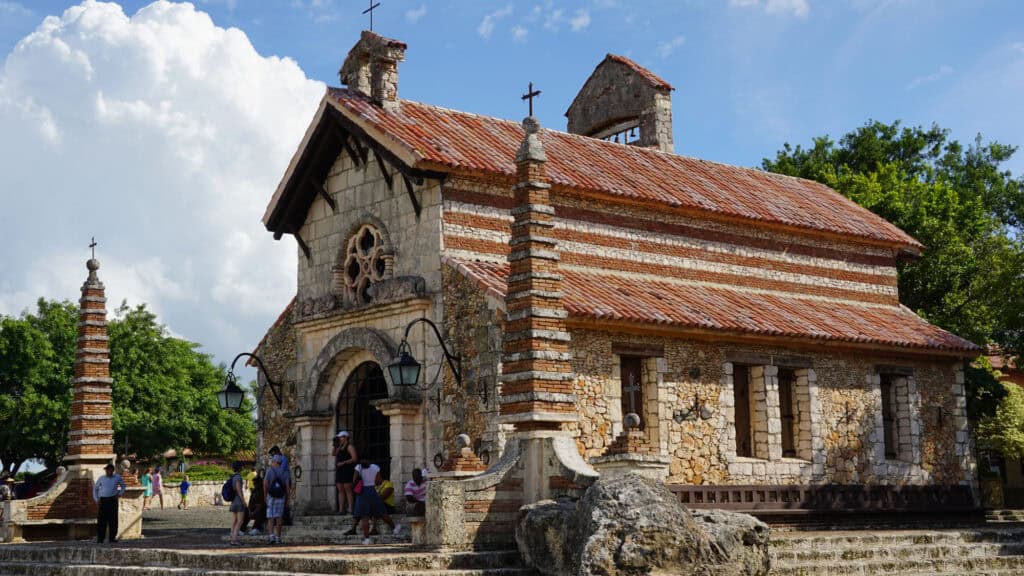
Altos de Chavón is a stone replica of a 16th-century Mediterranean village, built by hand on a cliff above the Chavón River in La Romana province, on the southeast coast of the DR. It isn’t a ruin and it isn’t a theme park. Artisans built every building, path, and iron sculpture from coral stone and terracotta, and the village has been lived in and worked in since it opened in 1982.
It sits inside Casa de Campo Resort & Villas, a 7,000-acre private resort — and that detail matters more than any other in this guide, because it shapes how you get in.
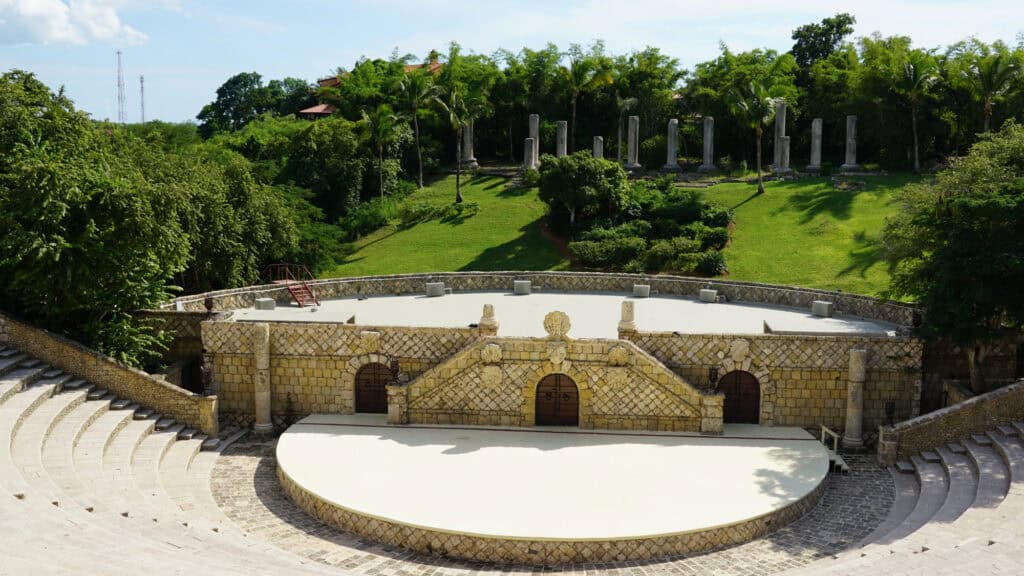
Today the village holds artisan shops, cigar and jewelry stores, art galleries, restaurants, a Taíno archaeology museum, a working design school, and a 5,000-seat Grecian-style amphitheater carved into the hillside. The Dominican Republic’s official tourism board calls St. Stanislaus Church its centerpiece, and it’s one of the most requested wedding venues in the country.
Quick facts before you go:
- Location: La Romana province, inside Casa de Campo Resort
- Nearest airport: La Romana (LRM), about 15–20 minutes away (see more below)
- Cost: Free for resort guests; non-guest access is by day pass, tour, or reservation — price and availability change, confirm before you go (see below)
- Payment: Cards are widely accepted at restaurants and shops; carry some pesos for small artisan purchases and tips
- Time needed: 2 to 3 hours to walk it properly, longer with a meal or a concert
💡 LEARN FROM MY MISTAKE
I reached the Casa de Campo Welcome Center around noon on a rainy day, already checked out of my apartment with a two-hour drive back to Santo Domingo ahead of me — and decided against paying. The pass buys entry to the village and nothing else: no meals, no drinks, no main resort area. For the ninety minutes I had left in the rain, it wasn’t worth US$50. Don’t tack this village onto a checkout day. Give it its own half day, aim for late afternoon, and confirm the pass is being sold on your date before you drive out. There’s more than one way in, though — I’ll walk through all of them below.
Altos de Chavón Entrance Fee, Access and Day-Pass Prices
Here’s the short answer: non-guests need a day pass, a booked tour, or a dining or villa reservation to get in, and neither the price nor the access itself is guaranteed on any given day. The Dominican Republic’s official tourism board confirms that non-guests are charged an entrance fee but doesn’t publish a current amount — and in my research, that’s not an oversight. Casa de Campo changes both the price and the access rules without much notice.
⚠️ CONFIRM BEFORE YOU GO
Traveler reports from 2026 describe day-pass prices historically ranging from US$30 to US$50 per adult — but also describe non-guests being turned away at the gate entirely, even on days when other day-trippers got in. Prices and access both change without notice, and I don’t trust any single figure enough to print it here as fixed, including my own. Call or email Casa de Campo directly before you drive out, or remove the uncertainty completely by booking a guided tour or staying at the resort.
What’s usually true, based on my visit and recent traveler reports:
- Resort guests, owners, and their invited guests: free, included with your stay.
- Day pass for non-guests: historically sold in the US$30–US$50 per adult range (roughly half that for children), sometimes with a cheaper tier that adds Minitas Beach and the Marina. It isn’t sold every day, and it’s typically suspended on concert days, holidays, and long weekends.
- Museum-only or dining visits: sometimes possible for a smaller fee even when general day-pass access isn’t being sold — worth asking about specifically if you’re turned away for a standard pass.
- Guided tour or resort stay: the only two ways to guarantee entry. A tour bus has pre-arranged access; a room or villa booking includes it.
If you take one thing from this section: don’t build a whole day around walking up to the gate and paying your way in. Book a tour, confirm a resort stay, or call ahead — the travelers who show up unannounced are the ones who get turned around.
Getting To Altos de Chavón By Air
Three airports realistically serve Altos de Chavón, and which one you’ll use usually comes down to where the rest of your trip is based rather than the village itself.
- La Romana International Airport (LRM): the closest by far, about 15–20 minutes from Casa de Campo’s gate. If Altos de Chavón and La Romana are the whole point of your trip, this is the airport to fly into — though flight options are more limited than Punta Cana’s.
- Punta Cana International Airport (PUJ): roughly an hour’s drive, and the airport most travelers actually land at, since it has far more direct flight options from the US and Canada. This is the practical choice if you’re pairing Altos de Chavón with a Punta Cana stay or a tour.
- Santo Domingo Las Américas International Airport (SDQ): about a two-hour drive, and the right call if you’re building a wider itinerary around the capital and treating Altos de Chavón as a day trip out of Santo Domingo.
Driving yourself from any of the three, remember the drive is only half the plan — you still need a confirmed way in once you arrive (see above).
Best Altos de Chavon Village Tour
For most travelers, a guided tour isn’t just the easier option — it’s the more reliable one. A tour bus rolls through the security gate with pre-arranged access, so you skip the day-pass uncertainty entirely. You also get a guide who can explain what you’re looking at, which matters in a place where the story behind the stone is the whole point. Here’s the best option from wherever you’re starting.
Best Tour From Punta Cana
The Day Trip to Saona Island and Altos de Chavón pairs the village in the morning with a catamaran ride out to one of the best beaches in the Caribbean, plus a Dominican barbecue lunch and open bar. It’s a long day — 9 to 10 hours door to door — but it turns a 90-minute village visit into a full-day excursion that justifies the drive.
Best Tour From La Romana
The Guided Tour of Maravillas Caves, Altos de Chavón and Cigar Factory pairs the village with a genuinely impressive cave system of Taíno pictographs, plus a stop at a working cigar factory. Booking online usually beats the resort tour desk on price, with real reviews and free cancellation up to 24 hours out.:
Best Tour From Santo Domingo
The Santo Domingo and Altos de Chavón Full-Day Small Group Experience covers the roughly two-hour drive east and pairs the village with a proper look at the capital’s cultural side, in a smaller-group setting than the bigger bus tours. Full-day tours from Santo Domingo typically run 9 to 10 hours — basing yourself in the capital? Some Santo Domingo neighborhoods are far better positioned for early tour pickups than others.
How To Visit Independently
Altos de Chavón sits inside the gated Casa de Campo resort, so getting in isn’t as simple as driving up and walking through. I learned this firsthand — I reached the Welcome Center without a confirmed way in and had to turn around. If you’re not booking a tour, there are three realistic ways to handle access yourself.
Stay At Casa de Campo
Booking a room or villa at Casa de Campo Resort & Villas removes the access question entirely. Entry to the village is included, it’s a short golf cart ride from your room, and you can see it at both sunset and in the quiet of the morning before day-trippers arrive. It’s the most expensive route by a wide margin, but if Altos de Chavón is the reason for your trip, it’s the option that guarantees you get in.
Get A Day Pass
Non-resort guests can sometimes buy a standard day access pass, sold (when available) from 10am to 5pm, historically priced around US$50 per adult and US$25 per child — but as covered above, neither the price nor the availability is guaranteed on your visit. This covers village entry only — not the main resort area, meals, transportation, or a guide — and it’s typically suspended on concert days, holidays, and long weekends including Christmas and Easter. Bring photo ID for everyone in your group; it’s checked at the gate.
Ask About The Discounted Day Tour Pass
A cheaper version of the day pass has been offered at the entrance — around US$30 per adult and US$15 per child— that adds access to Minitas Beach and the Marina on top of the village, with the same hours and the same exclusions as the standard pass (no meals, no transportation, no guide). It isn’t always advertised, so ask directly when you arrive rather than assuming it’s off the table.
Before You Go
The single most important prep step is confirming how you’re getting in. If you’re staying at Casa de Campo, you’re covered. If you’re on a tour, you’re covered. If you’re driving yourself, verify the day pass is available on your date, bring photo ID for every person in your vehicle, and have a backup plan. Passports or photo identification are checked at the gate.
Wear real shoes. The whole village is cobblestone and coral stone, with an incline from the parking area and stairs down toward the river overlook — this is not the place for flimsy sandals or heels. A supportive walking sandal or a broken-in sneaker is the right call.
Bring sun protection too. There’s very little shade in the open plazas, and the stone reflects heat through the middle of the day.
Shops and galleries generally run 10am to 6pm; restaurants stay open later into the evening. Budget accordingly — village restaurants are priced at resort level, not local level, and a sit-down lunch can run US$50 or more per person. For everything else: a light layer for the evening, a camera or a charged phone, and a reservation if you plan to eat. La Piazzetta and the other village restaurants fill up on weekends and concert nights. If there’s a show at the amphitheater during your stay, buy those tickets separately and well in advance — big concerts sell out, and the day pass is typically suspended on show days.
💡 PRO TIP
Go late afternoon if you have the choice. The light on the coral stone between about 4pm and sunset is the reason photographers love this place, the heat has broken, and the village transitions naturally into dinner with the lamps on. Midday visits are hot, flat-lit, and crowded with tour groups.
What To Expect At The Village
Expect a quiet, curated, walkable village rather than a bustling attraction. There are no hawkers, no vendors chasing you down the street, and no entrance carnival — which is genuinely rare in Caribbean tourism and one of the things repeat visitors love most. It’s compact enough to cover on foot in an hour and rewarding enough to linger in for three.
Two to three hours is the sweet spot for most people. That gives you the main plaza, St. Stanislaus Church, the amphitheater, the Regional Museum of Archaeology, the artisan shops, and the river overlook. Add a meal and you’ve built a comfortable half day.
This is a great half-day stop for couples, photographers, culture-first travelers, and cruise passengers looking for one high-value stop — or honestly, anyone who’s ready for a break from resort grounds.
It’s less of a fit if you’re traveling with small kids who need activities to stay engaged, or if paying to walk around a village isn’t your idea of a good time. If a beach day matters more to you than architecture, pair this with Saona Island rather than visiting on its own.
St. Stanislaus Church
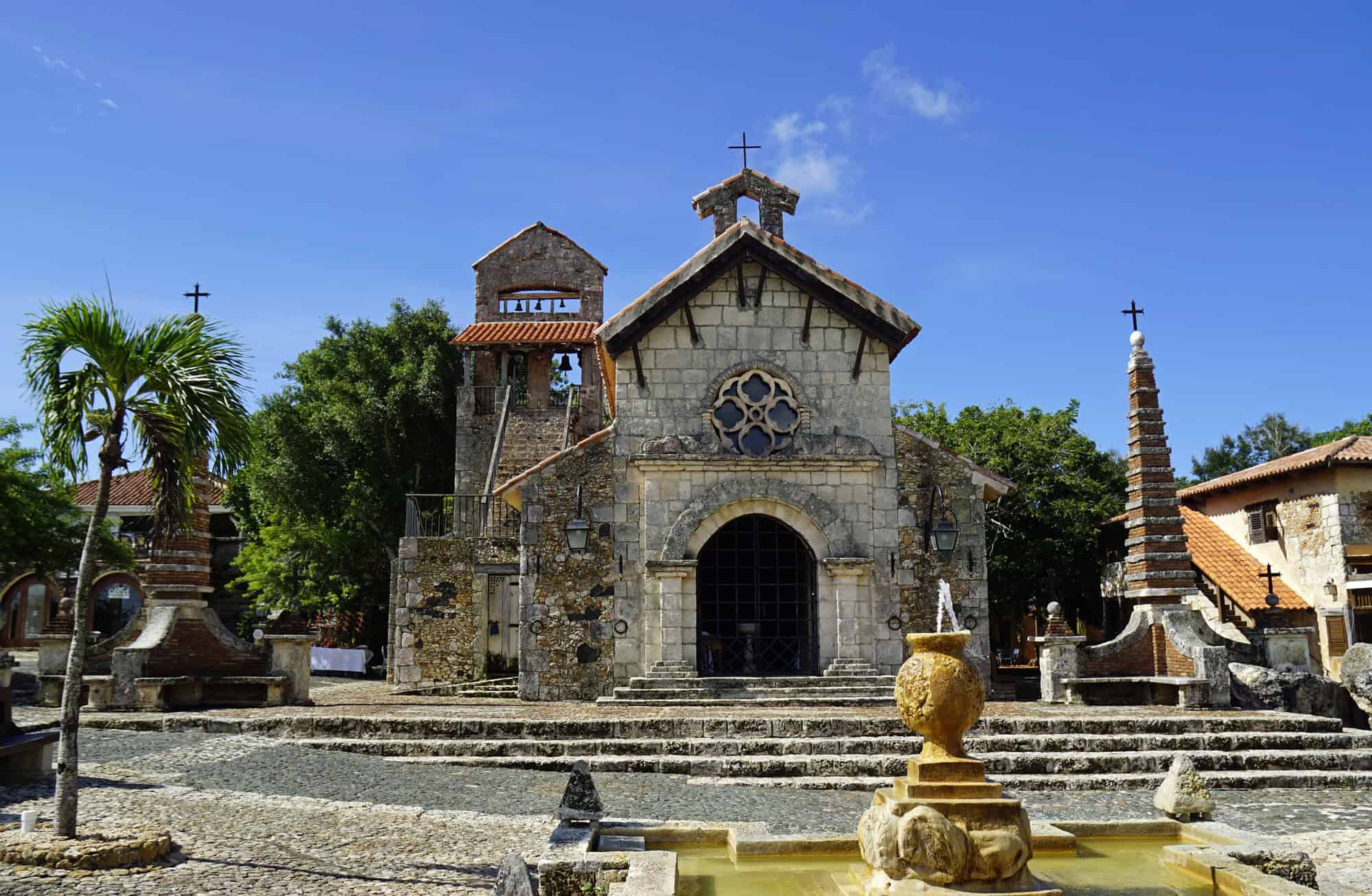
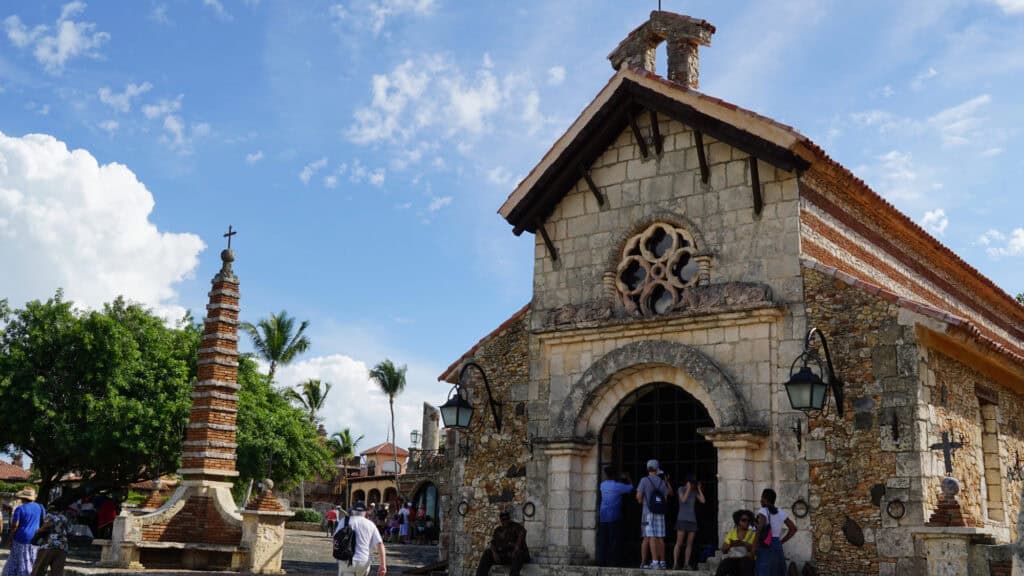
This is the village’s centerpiece, and its most photographed spot. Consecrated in 1979 and named for the patron saint of Poland in honor of Pope John Paul II — the Pope sent a hand-carved statue and the saint’s ashes from Kraków to mark the opening. The rustic brickwork and stained glass make it a striking space to step inside for a few minutes, and the plaza and fountain out front are a popular photo stop even if you don’t go in. Mass is held here Wednesdays, Saturdays, and Sundays.
Weddings at Altos de Chavón are a category of their own. The church, with the river gorge behind it, is one of the most photographed ceremony sites in the DR, and Casa de Campo runs a dedicated weddings department that handles the church, reception venues, and guest villas. Expect resort pricing, a formal booking process, and a minimum stay for your party — couples usually build a three- to five-day weekend around it.
Regional Museum of Archaeology
Tucked behind the church, this is one of the most complete collections of its kind in the Caribbean — more than 3,000 pre-Columbian artifacts spanning roughly 4,000 years of Taíno and indigenous history, well organized into an educational, easy-to-follow layout. Admission is a few dollars, often included with resort access. It takes about 30 to 45 minutes to see properly, and it’s easy to walk past without noticing it since the entrance is unassuming — don’t skip it.
Shopping And Artisan Studios
The narrow cobblestone streets are lined with working studios and small galleries selling pottery, weaving, silk-screened prints, and other handmade pieces from local and visiting artists. Prices run higher than typical Dominican souvenir stands, but the quality and originality are well above what you’ll find at a resort gift shop — this is a good spot for a real keepsake rather than a magnet.
Where To Stay Near Altos de Chavón
Where you sleep changes what this visit costs you. There are three realistic approaches, and they’re very different trips.
Stay inside the resort. Booking a room or villa at Casa de Campo Resort & Villas removes the access question completely — the village is a short golf cart ride away, entry is included, and you can see it at sunset and again in the quiet of the morning. It’s the most expensive option by a wide margin, but if Altos de Chavón is the reason for your trip, it’s the one that guarantees you get in.
Base yourself in La Romana city. This is what I did, and it’s the value play. Stays near Playa Caleta put you roughly 15 minutes from the Casa de Campo gate at a fraction of resort pricing. I stayed at Gaviota Paradise on Calle G — an adults-only apartment complex steps from Caleta Beach, with an outdoor pool and hot tub, a sun terrace with sea views, free on-site parking, and an airport shuttle option 10 km from La Romana International. If you prefer a bookable suite option near Playa Caleta, Palmares Suites is another place to check.
- Casa de Campo Resort & Villas: https://expedia.com/affiliates/punta-cana-hotels-casa-de-campo-resort-and-villas.ZWj8rfq
- Gaviota Paradise: https://www.booking.com/hotel/do/hermoso-departamento-con-jacuzzi-cerca-de-la-playa.html
- Palmares Suites near Playa Caleta: Check availability on Expedia
- Caleta Beach: https://www.google.com/maps/search/Playa+Caleta+La+Romana+Dominican+Republic
I picked it for two specific reasons: the pool, and several restaurants and bars within walking distance. It also sits right on the malecón, La Romana’s seafront promenade, which is where the town actually comes alive in the evening. That combination matters more than it sounds. It meant I never had to get in a car for food, drinks, or an evening out — exactly what you want on a few slow days, and the opposite of the resort model where everything is on property and priced accordingly. It’s a simple, no-frills place rather than a luxury stay, but the location does the heavy lifting.
Stay in Bayahibe. About 20 to 25 minutes west, Bayahibe is the launch point for Saona and Catalina Island tours and has all-inclusive options like Hilton La Romana and Dreams Dominicus La Romana. Good if you want beach days as the main event with Altos de Chavón as a half-day excursion.
- Bayahibe:
- Hilton La Romana: https://expedia.com/affiliates/san-rafael-del-yuma-hotels-hilton-la-romana.JnoRoxl
- Dreams Dominicus La Romana: https://expedia.com/affiliates/punta-cana-hotels-dreams-dominicus-la-romana-all-inclusive.J73vqOB
FAQs
A few questions come up again and again about Altos de Chavón — here are the straight answers.
Can anyone go to Altos de Chavón?
Not freely, and not predictably. The village sits inside the gated Casa de Campo resort, so entry requires a day access pass (historically US$30–US$50 per adult, when it’s being sold), a booked tour, a dining reservation, or a stay at the resort. Non-guest access has been inconsistently enforced in 2026 — some travelers are turned away at the gate even when others get in the same day — so confirm before you drive out. The pass, when available, covers village entry only, not the main resort area, meals, drinks, transportation, or a guide.
What is the history of Altos de Chavón?
It was built between the mid-1970s and 1982 by Charles Bluhdorn, the Gulf+Western chairman whose company owned Paramount Pictures, and designed by Italian designer and cinematographer Roberto Copa. It opened in 1982 with Frank Sinatra’s “Concert for the Americas” at the amphitheater, and it also houses the Chavón School of Design, affiliated with Parsons School of Design in New York.
What movies were filmed in Altos de Chavón?
The Chavón River gorge below the village stood in for Vietnam in Apocalypse Now and Rambo: First Blood Part II, and river footage also appears in Jurassic Park. The village itself isn’t the on-screen location — the canyon is — but you’re looking at the same landscape from the overlook.
Final Thoughts
Altos de Chavón is one of the few places in the Dominican Republic that rewards slowing down. It’s not a beach, it’s not an adrenaline excursion, and it doesn’t try to be. It’s a hand-built stone village on a cliff, made by artisans, kept alive by a design school, and framed by a river gorge that’s been standing in for the ends of the earth on film for fifty years.
My honest take: it’s worth a half day, but only if you plan the access piece properly. The travelers who come away disappointed are almost always the ones who drove out on a whim, paid US$50 at the gate for a walk they finished in 45 minutes, or — like me — showed up at the wrong hour on the wrong day and turned around. The travelers who love it booked a combination tour, arrived in the late afternoon light, ate a proper meal, and let the place breathe. That’s the version I’m planning for my next trip out.
If you’re building a wider Dominican Republic itinerary around this, it slots naturally into the southeast — pair it with Saona Island, Bayahibe, or a few days in Punta Cana. Personally, I’d give La Romana two or three nights of its own. It’s the quiet middle ground between the resort strip and the capital, and Altos de Chavón is a much better experience when you’re not racing a tour bus schedule.
Still deciding where in the country to base yourself? The north coast and the east coast offer two very different versions of the DR, and which one suits you depends on whether you want beach clubs or mountains behind your resort.